
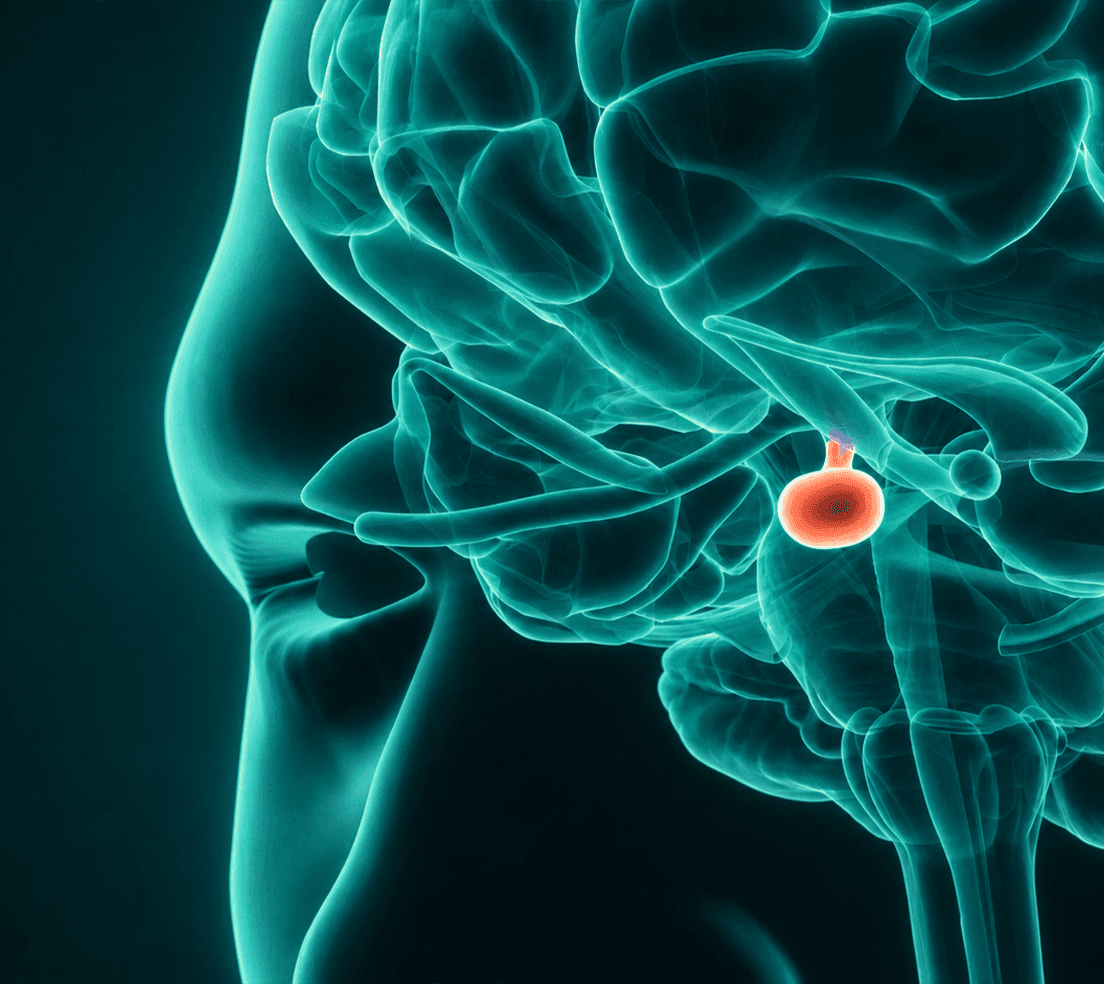
Pituitary Tumors: Symptoms, Diagnosis & Treatment Options
What Are Pituitary Tumors? Pituitary tumors are abnormal growths that develop in the pituitary gland, a small gland located at the base of the brain that plays an important role in regulating hormones. Most pituitary tumors are benign (non-cancerous), but they can affect the body's hormone production or grow large enough to put pressure on nearby structures, particularly the optic nerves, which can affect vision. The symptoms and treatment approach depend on the type, size, and location of the tumor, as well as whether it produces hormones. What Are the Symptoms of Pituitary Tumors? Pituitary tumor symptoms can vary depending on whether the tumor affects hormone production or puts pressure on nearby structures. Possible symptoms include: Persistent headaches. Changes in vision or reduced peripheral vision. Hormonal imbalances. Menstrual irregularities in women. Reduced sex drive or fertility problems. Abnormal breast discharge in some cases. Symptoms related to excessive or insufficient production of specific hormones. Some pituitary tumors may not cause noticeable symptoms and can be discovered incidentally during imaging performed for another reason. How Are Pituitary Tumors Diagnosed? A pituitary tumor diagnosis usually involves several assessments to determine the type and effect of the tumor. These may include: Medical history and physical examination. Hormone blood tests to evaluate pituitary function. Magnetic Resonance Imaging (MRI) to determine the size and location of the tumor. Visual field testing when the tumor may be affecting the optic nerves. The results of these tests help determine the most appropriate treatment approach. How Are Pituitary Tumors Treated? Pituitary tumor treatment depends on the type and size of the tumor, its effect on hormone levels and vision, and the patient's overall condition. Treatment options may include: Regular Monitoring Small tumors that are not causing significant symptoms may sometimes be monitored through regular medical evaluations and imaging. Medication Certain types of pituitary tumors can be treated with medication to control hormone production or reduce the size of the tumor. Endoscopic Surgery When surgery is recommended, some pituitary tumors can be removed using endoscopic transnasal surgery, in which the surgeon accesses the tumor through the nasal passages without opening the skull. This approach may be suitable for many pituitary tumors, depending on their size, location, and characteristics. Radiation Therapy Radiation therapy may be considered in selected cases, particularly when a tumor cannot be completely removed surgically or continues to grow. When Is Pituitary Tumor Surgery Needed? Not every pituitary tumor requires surgery. Pituitary tumor surgery may be considered when the tumor is causing significant symptoms, affecting vision, producing hormones that cannot be adequately controlled with medication, or continuing to grow. In appropriate cases, endoscopic transnasal surgery can provide access to the pituitary gland through the nose without the need for a traditional craniotomy. The decision to perform surgery depends on the tumor's characteristics and the patient's overall condition. When Should You See a Doctor? You should seek medical evaluation if you experience: Persistent or unexplained headaches. New or worsening vision problems. Changes in your peripheral vision. Unexplained hormonal changes. Menstrual irregularities. Fertility problems. Unusual breast discharge. Other symptoms that may indicate a hormonal imbalance. Early evaluation can help identify the cause of these symptoms and determine whether further testing is needed. Conclusion Pituitary tumors are often benign, but they can affect hormone production or put pressure on nearby structures such as the optic nerves. Accurate diagnosis is essential for determining whether the appropriate approach is monitoring, medication, radiation therapy, or pituitary tumor surgery. For suitable cases, endoscopic transnasal surgery can provide a minimally invasive approach to removing the tumor without opening the skull. If you are experiencing persistent headaches, vision changes, hormonal symptoms, or other unexplained symptoms, consult Dr. Osama Mostafa Mowafy, Consultant Neurosurgeon & Spine Surgeon, for proper evaluation and an individualized treatment plan.